Evidence question / How does fit shape what a result means?
A helmet’s protective architecture is designed to work in a particular position on the head. Fit therefore connects the product to its use. Shell coverage, liner placement and retention features can only be interpreted alongside the way a helmet is sized, adjusted and worn. Yet fit is rarely reducible to a single laboratory number. A test may use a standardized headform and a prescribed setup to make specimen placement repeatable; a wearer brings individual head shape, hair, movement and adjustment choices.
Start with position, not a label
Size markings are a starting point, not a universal fit verdict. Manufacturers may specify how to measure, select a size and position a model. Follow the instructions for the exact helmet rather than assuming that nominal sizing is interchangeable across brands or product types. A fit that feels secure in one model may not translate to another because internal shape, padding and adjustment range differ. Where a maker offers fit guidance or qualified fitting support, that information is more relevant than an assumption based on a number alone.
Position matters because a helmet is engineered with intended coverage. If it sits too far back, too high or at an angle not described by its instructions, the relationship between the head and protective structure changes. A reader cannot infer from a pass result that every wearer will achieve the tested position. Nor does a comfortable fit by itself establish impact performance. These are related but separate questions: does the product meet a defined test requirement, and can the individual wear it in the intended position?
Retention is a functional link
Straps, closures and adjustment systems are designed to help keep a helmet in place. Their operation depends on proper routing, adjustment and condition. Look for the manufacturer’s instructions on fastening, tension, adjustment range and inspection. Do not substitute generic advice for product-specific directions. A system that is misrouted, loose, damaged or not fully engaged may not behave as intended. At the same time, a laboratory retention test remains a controlled test of a defined setup. It should not be presented as proof that every fit or event will be identical.
Fit is dynamic. Head movement, activity, sweat, clothing and repeated adjustment may affect how stable a helmet feels. That does not mean that a wearer can judge performance by sensation alone; it means fit should be checked rather than assumed. Revisit adjustment after changing pads or sizing components, and review the model’s instructions after maintenance. When a helmet shifts during ordinary movement or creates persistent pressure, consult the maker’s fit guidance for alternatives. A helmet that does not suit an individual may be the wrong choice even if its documentation is strong.
What laboratory methods can and cannot show
Headforms provide a controlled basis for repeatable placement and measurement. They make it possible to compare specimens under defined conditions, but they represent a simplified geometry. Human heads vary; soft tissue, hair, posture and movement are not fully represented by a rigid test fixture. The fixture is useful precisely because it standardizes a portion of the experiment. Its limitations should be stated whenever conclusions are extended to wearers.
When a source reports a fit-related method, inspect the headform, adjustment procedure, retention condition and any stated tolerance. Find out whether the protocol checks positional stability, strap behavior or only impact response with a prepared specimen. These details determine what the result can support. A protocol that holds a helmet consistently in place does not automatically answer how a diverse population will choose sizes or maintain adjustment. That wider question calls for other evidence, such as usability research or documented field observations, each with its own methods and limitations.
A practical evidence-led fit check
Use the exact manufacturer instructions: confirm the recommended size, put the helmet on in the prescribed position, adjust any fit system and fasten the retention system as directed. Check stability and comfort without treating either as a substitute for formal testing. Recheck after movement and after any adjustment. Inspect straps, fasteners, pads and shell condition in line with care guidance. If the model has experienced an impact, follow the manufacturer’s replacement advice; damage may not be visible. If uncertainty remains, ask the maker or a suitably qualified fitting professional rather than guessing.
For coaches and product readers, explain fit as an enabling condition—not a guarantee. A published result tells readers about a specimen, protocol and stated measure. Fit information tells them how the maker intends the product to be positioned and secured. Neither source alone settles every real-world question. The careful conclusion is narrower and more useful: fit helps connect design intent with use, while human variation and changing conditions remain part of the uncertainty.
Source note: consult the helmet’s own fit and care instructions, the relevant standard and the original technical report for any fit-related test claims.
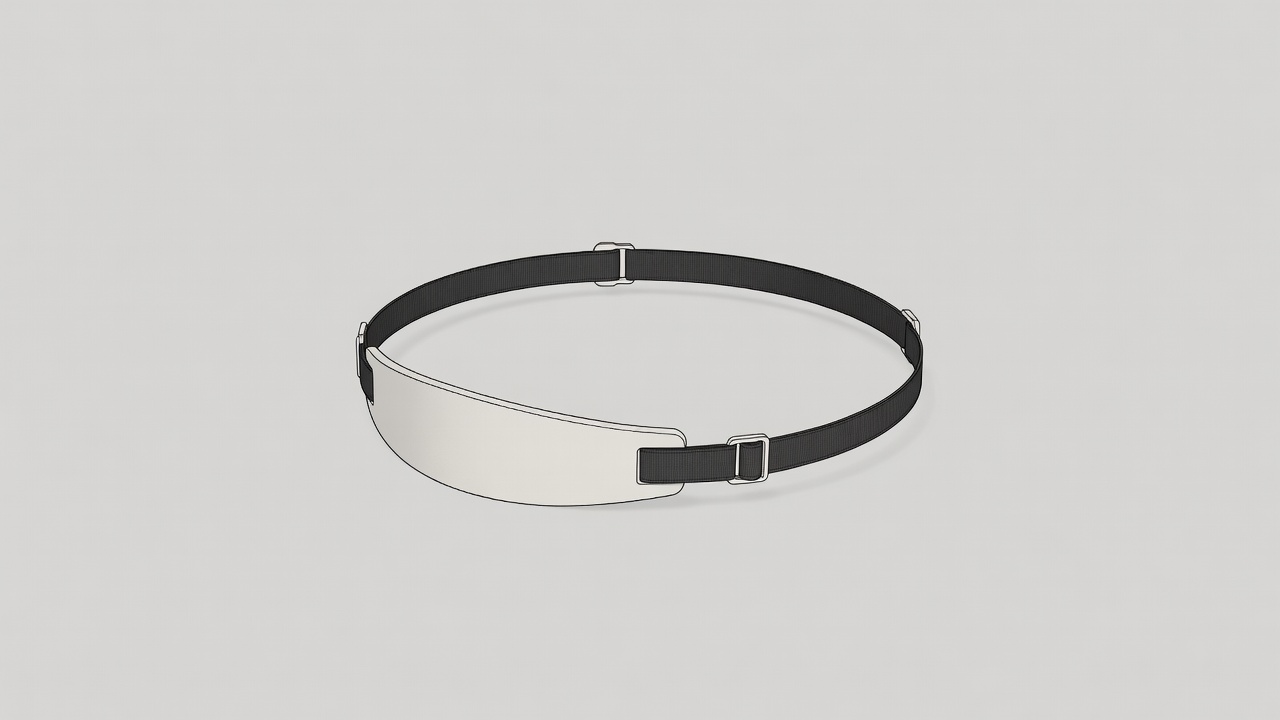
Adjustment changes placement
Illustrative cutaway; not a depiction of a tested product or an endorsement of a specific fit system.